Micro Parks and Pocket Gardens: The Benefits of Small-Scale Parks
Jun 14




Parks are huge assets to their communities. They’re ideal places for all kinds of recreation activities, provide a free place for healthy exercise, and are a community space for gatherings and events. Yet perhaps the most important function of parks is their role as an environmental asset. They play the critical part of protecting natural resources and educating future generations. They have lasting environmental impact, from supporting wildlife habitats to improving air quality. Through thoughtful park and playground design, we can encourage environmental stewardship and help communities become active participants in conservation efforts. Let’s explore how!
Environmental stewardship is defined as the responsible use and protection of the natural environment through conservation and sustainable practices to enhance ecosystem resilience and human well-being. (Source: NOAA) Good parks naturally embody the principles of environmental stewardship. They’re the perfect places to protect native plants and trees, create pollinator habitats, and provide opportunities for people to connect with nature and learn about sustainability. Local parks, big and small, are also a key part of stewardship because they provide an accessible option for communities to address climate resilience and environmental challenges. In the following paragraphs, we’ll get into different ways parks can intentionally achieve stewardship, as mentioned above: Native plants, pollinator habitats, tree conservation, and sustainability education.
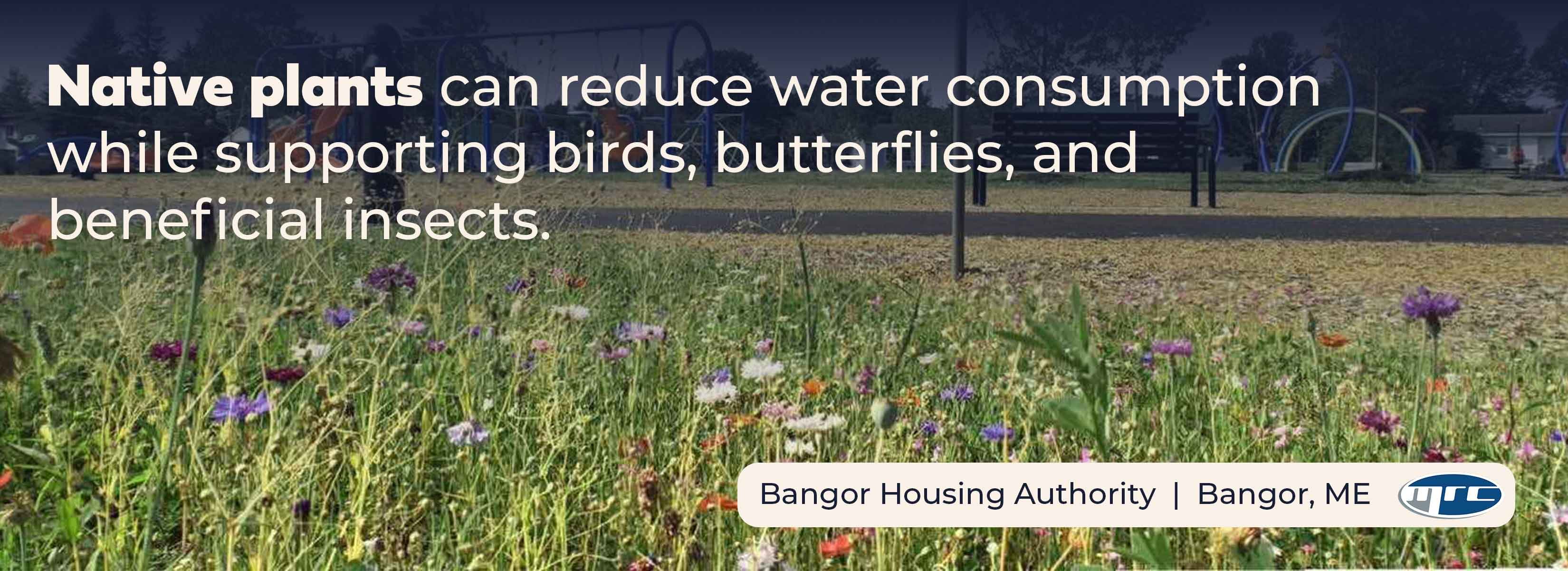
By planting and growing native plants at the park, you’re supporting your local ecosystem! Native plants occur naturally in the region where they evolved, providing the ecological basis upon which life depends, including people. Without them, local insects and birds cannot survive. (Source: Audubon Society) Because they are adapted to local climate and soil conditions, they naturally require less irrigation, fertilizer, and maintenance than non-native species. They’re also the most resilient to the local weather conditions.
Because of the host of benefits that come with native plants being indigenous to their environment, parks that choose to grow them:
Pollinators like bees, butterflies, moths, birds, and bats are essential to healthy ecosystems. One out of every three bites of food you eat grew because of pollinators! In fact, three-fourths of the whole world’s flowering plants and about 35% of the world’s food depends on animal pollinators. (Source: USDA) Tragically, many pollinator populations have declined due to habitat loss.
Thankfully, we can help pollinators and it’s relatively easy to do so! Here are some park features that benefit us and our local pollinators:
Trees are the lungs of the Earth; They improve air quality by filtering pollutants, and they capture and store carbon. Trees in urban areas play the important role of reducing the heat island effect, a phenomenon caused by heat-trapping surfaces like concrete and asphalt. These materials absorb the sun’s energy and radiate it back into the air, raising temperatures. (Source: Arbor Day Foundation) Planting trees is essential to keeping communities healthy and cool as they face increasingly hot weather.
Trees provide a wealth of benefits, not limited to:
We also want to note some planning considerations if you want to include trees in your park’s landscape:
The 7 Principles of Leave No Trace are a framework of minimum impact practices for anyone visiting the outdoors:
These principles can be applied anywhere and are so important for our local parks. Through following them, we can ensure everyone, no matter where they’re exploring, has the knowledge and tools to enjoy nature and minimize their impact. Guiding people to make low-impact decisions helps preserve our parks for future generations, while reducing maintenance and environmental impacts in the present. We’ve derived some key principles from Leave No Trace to follow in public parks:
To educate your community about The Principles of Leave No Trace, there are several things you can do throughout the park:
Parks are perfect partners in conservation efforts. They’re uniquely positioned to connect people with nature while simultaneously supporting healthier ecosystems, helping both protect and preserve natural spaces and encourage happier and healthier communities. Through native plants, pollinator habitats, tree preservation, and responsible recreation practices, communities can create parks that achieve in doing just that: Benefiting both people and the environment. Environmental stewardship is about protecting nature, and about protecting us. But, the most important thing it’s about is building stronger, healthier communities for future generations.
Looking to champion environmental stewardship and incorporate sustainable features into your next park project? Connect with our team to explore ways to create and support outdoor spaces that support both recreation and nature.